
Measuring Visibility in SEO
A Smarter Framework for Dental Practices

Investing your marketing budget into SEO becomes a lot more comfortable when you can measure its impact in a way that actually makes sense.
If you can't, you end up in a strange limbo where the only two options feel like: (1) asking an AI chatbot whether your SEO is “good” and hoping it doesn't hallucinate you into a false sense of confidence, or (2) relying on agency reporting without really knowing what the numbers mean, where they come from, or what someone could be leaving out.
That's not a healthy way to manage a marketing channel, and it's certainly not a good way to make decisions about the growth of your dental practice.
At Studio EightyEight, we don't sugarcoat reporting. If things are going well, we show what's working, celebrate the wins, and explain how we plan to continue that momentum.
If things are going poorly, we show what's not performing, provide insight into what's happening, and outline what we plan to do to course-correct.
Offering that level of clarity isn't just a value statement; it's practical. We can't assess performance if the data isn't clearly laid out, and we can't fix an issue if we keep explaining it away.
This article is meant to give practice owners and their dental marketing teams that same framework so you can understand what visibility actually is, recognize when reporting is meaningful versus misleading, and ask better questions that lead to better outcomes. It's our deepest dive and most detailed inside-scoop on our SEO team's approach, how we defines success, and how we might differ from other marketing agencies. Let's get to it!
What “Visibility” Actually Means
Let’s say you’re reviewing your marketing budget for the next quarter. SEO is one of the larger line items. You ask your team, “Is this working?”
If their only answer is, “We rank #1 for our target keywords,” that sounds reassuring, but it doesn't really address the question. If their answer is, “Traffic is up,” that sounds promising, but traffic alone doesn't tell you whether the right patients are finding you. And if they say, “We're getting more visibility,” but can't define what that means, the conversation quickly becomes vague.
This scenario plays out more often than most marketing managers would like to admit. It’s a problem, not because anyone’s being careless, but because it invites confusion. Different metrics often get used to answer the same question.
When most people talk about “visibility” in SEO, they usually mean one of three things: rankings, traffic, or awareness.
Keyword rankings describe where a page tends to show up on average for just one query at a time.
Traffic describes what happened after someone clicked.
Awareness describes whether people are seeing your brand at all in search, typically measured through impressions.
Each of those metrics answers a different question. The problem arises when they're used as if they answer the same question.
Strong rankings don't automatically mean strong business performance. A dip in traffic doesn't automatically mean SEO is failing. High impressions don't automatically translate into booked appointments. When we treat these signals as interchangeable, we end up making budget decisions based on incomplete logic.
So instead of reaching for a technical definition, think about visibility in practical terms.
Visibility is when your practice consistently shows up across relevant queries, answering the questions patients are actually asking.
When you frame visibility that way, the budgeting conversation changes. It's no longer about whether you “won” a keyword or whether a single traffic chart went up or down this month. It becomes about whether your practice is reliably present in the research, consideration, and decision-making layer of search.
That gives you a more grounded basis for investing in SEO, especially since being surfaced on Google doesn't always result in a traditional click but can still influence who ultimately picks up the phone.
What Your Google Tools Measure
And why they don’t seem to match
One of the most common moments of confusion in SEO reporting happens when someone compares Google Search Console clicks to Google Analytics 4 sessions and assumes the mismatch between the two means something's broken.
It usually isn't. These tools measure different stages of the same journey.
Search Console captures what happens on Google's side: how often your pages appeared, what people searched, and how often they clicked. GA4 captures what happens on your site after someone arrives, which introduces variables like consent settings and blocked tracking scripts that Search Console never sees.
A click in Search Console is not the same as a session in GA4, and that's by design.
If you want to know whether your practice is showing up in search, Search Console and your Google Business Profile are your primary tools. GA4 becomes relevant once you want to understand what people do after they arrive.
The Visibility Stack & A Practical Framework for Evaluating Visibility
A clearer way to approach reporting is to decide which question each tool is meant to answer and avoid using it to answer anything else.
- Google Search Console answers: Are we showing up on Google, and for what?
- Google Business Profile answers: Are we showing up in local search results, and are people taking actions from our profile?
- GA4 answers: Once someone lands on our website, do they engage with our content, explore our site, and take steps toward booking an appointment?
If you want a repeatable way to evaluate visibility without getting lost in dashboards, use this three-layer view.
The Three Layers of Visibility
Layer 1: Topic visibility. Are impressions and clicks growing for the services you care about?
Primary tool: Search Console.
Layer 2: Local visibility. Are you being surfaced in Maps and local results, and are users taking immediate actions?
Primary tool: Google Business Profile.
Layer 3: Engagement quality. When people land on your website, do they engage and move toward becoming a patient?
Primary tool: GA4.
Search Console: Measuring Visibility Before Traffic
Search Console is where you see the earliest measurable signal of SEO performance. Being shown comes before engagement and revenue.
Visibility as a First Impression
When your practice appears in search, you're not just “getting exposure.” You're making a first impression and giving potential patients a silent question: Is this practice worth my time? This is where we see SEO and visibility intersect with brand.
Their answer to that question is shaped by more than ranking position. It's influenced by your title tag and meta description, how relevant the result appears to the query, whether your brand name is recognizable, and whether your reputation signals feel credible.
CTR (Click-Through Rate, which measures the percentage of people who click links on your site) often becomes one of the most honest visibility signals because it reflects how patients respond to that first impression. It's not purely an SEO variable, it can reflect brand recognition, messaging clarity, review strength, and perceived professionalism.
The Four Core Search Console Metrics
There are four metrics that matter most in Search Console when it comes to evaluating performance:
Impressions: how often you appeared.
Clicks: how often someone clicked your site URLs.
CTR: how often your URLs were clicked after being seen.
Average position: a directional estimate of where you tended to show up in the results list.
Position (i.e., rank) should be treated as directional evidence, not a measure of visibility. It's averaged across location, device, personalization, and SERP features.
Where many practices get stuck is using Search Console (and other popular SEO tools) like a keyword scoreboard. “Did we rank higher for this keyword?” is a narrow framing that can mislead you about what's actually happening with your search visibility.
A better question is: Are we growing visibility for the services we want to be known for?
That's a topic question, not a single-keyword question.
Why Individual Keyword Tracking Is Fragile
The following two images illustrate how individual keyword rankings (Position) do not correlate with actual visibility or engagement (measured by Impressions and Clicks). We love the results in the second image more than the first, even though all of the rankings are lower than #1.
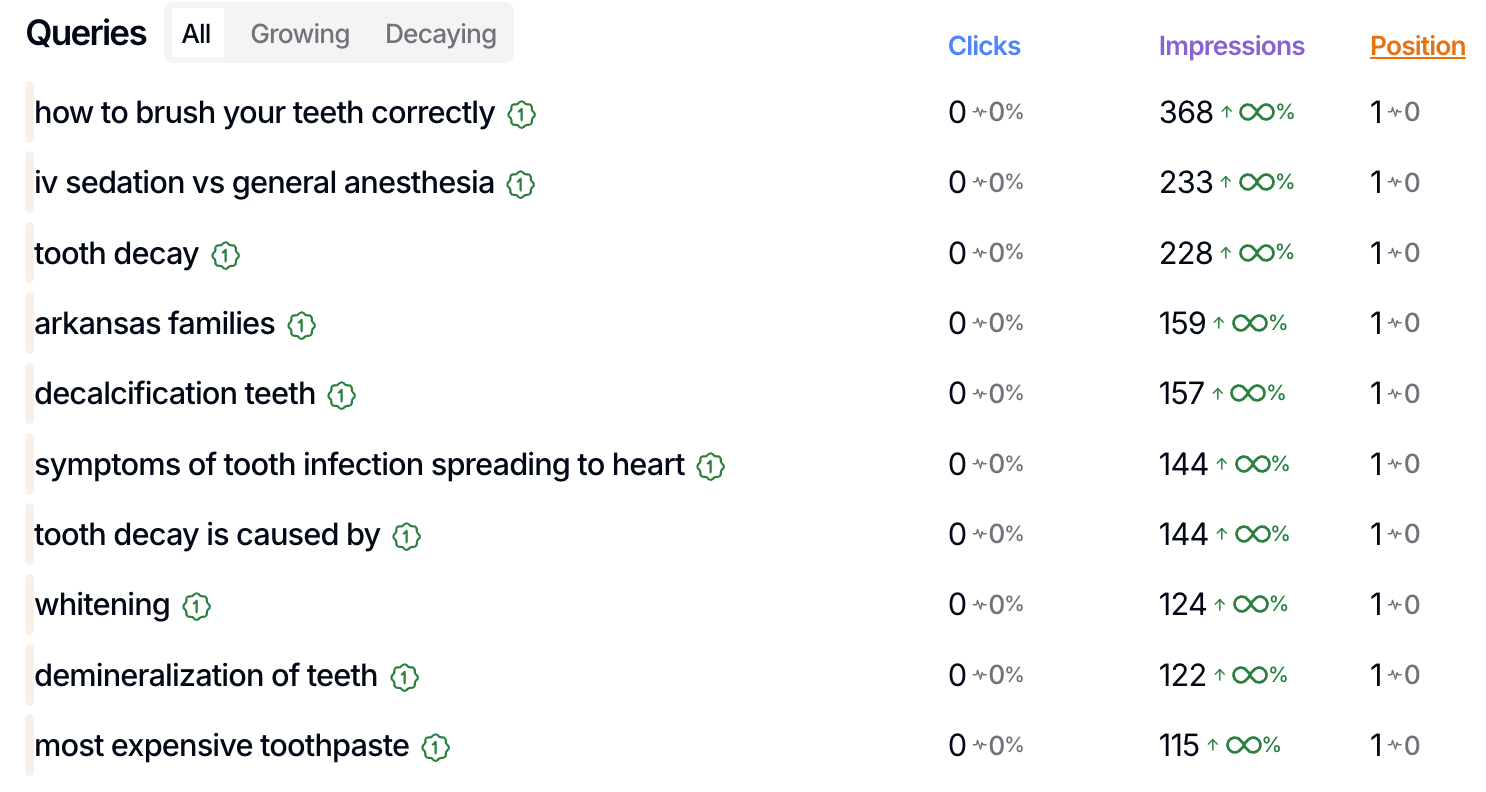
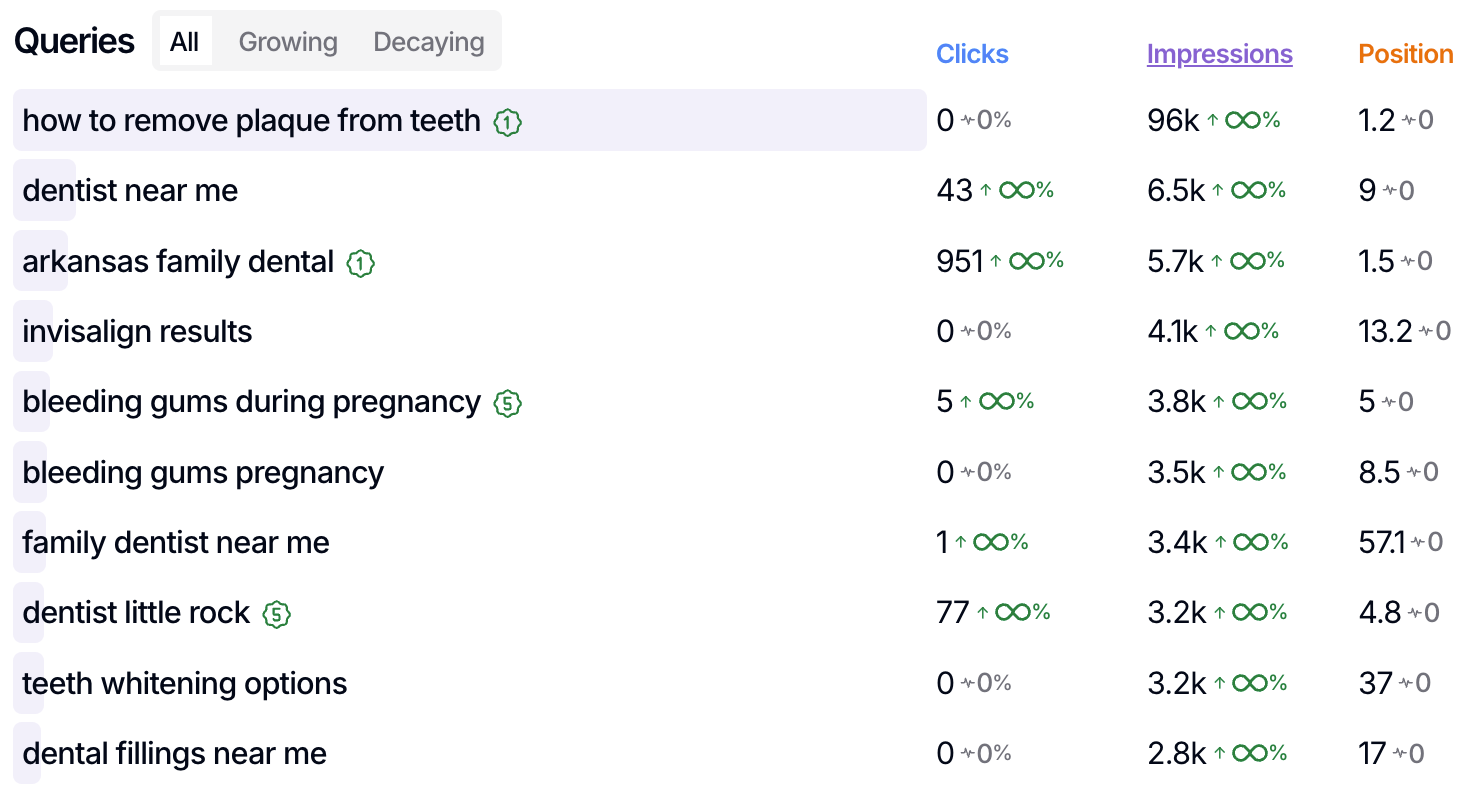
Keyword-level measurement feels concrete, which is why it's tempting to rely on it—even though it's an outdated modality. It's also one of the easiest ways to misunderstand your SEO performance.
Patients don't search like SEOs. They search in clusters of intent: pain, urgency, cost, fear, reassurance, comparisons, and location. Even when different patients ask about the same thing, they phrase it differently based on how they personally talk and what they already know.
One page usually ranks for many queries. If your Invisalign page performs well, it's not ranking for just one phrase. It's being surfaced across a wide range of related searches. Measuring organic visibility based on one term is like judging a movie based on a single frame.
Rankings also aren't the same as performance. You can rank highly for something that doesn't generate meaningful patient opportunities, and you can rank modestly across dozens of high-intent queries and generate real growth.
Instead of measuring one keyword at a time, measure visibility by topic and page.
Topic-Level Visibility
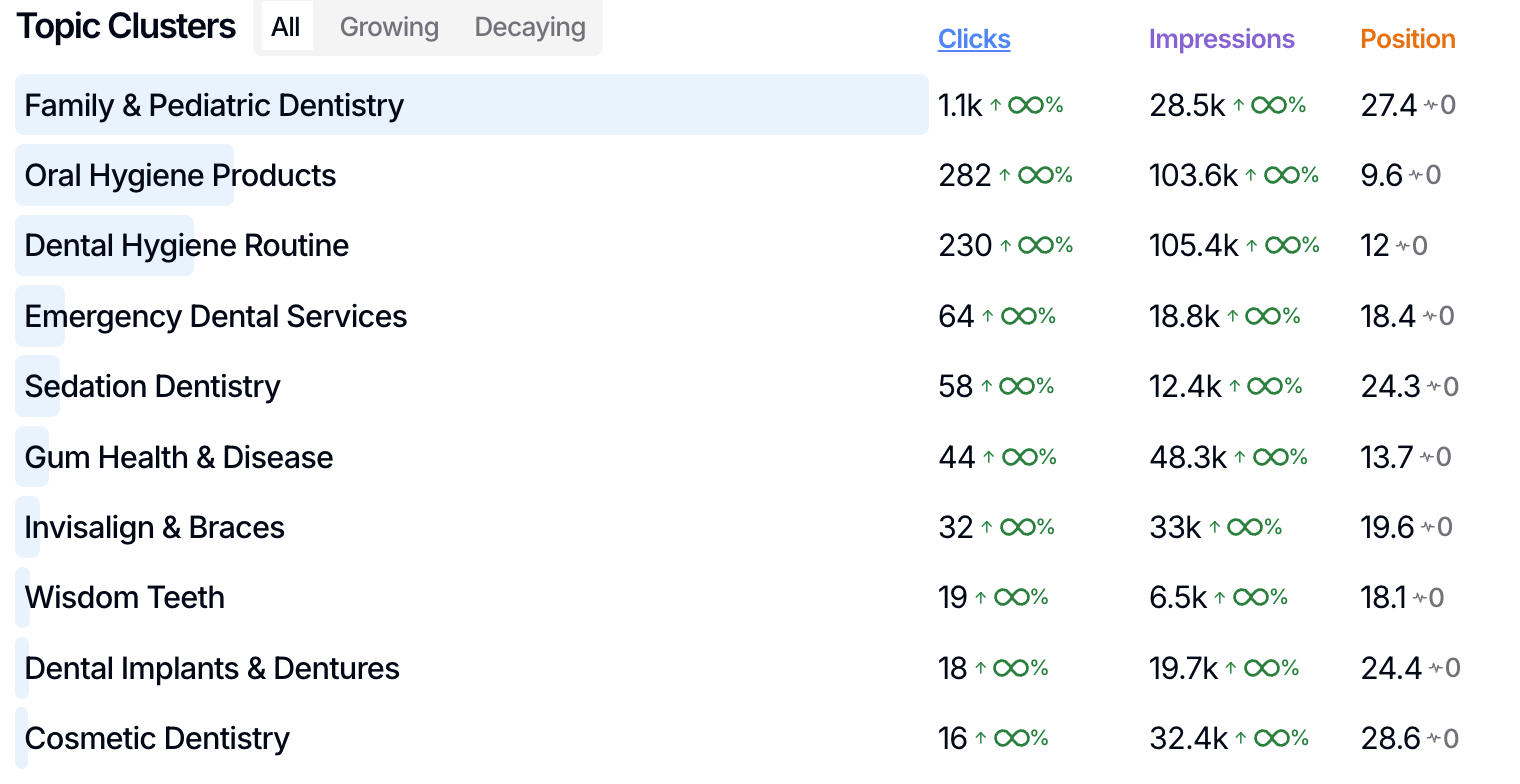
Topic-level visibility means evaluating a cluster of related searches as one bucket. Instead of asking, “Where do we rank for dental implants in our city?” you ask, “How visible are we for the implants topic overall?”
Search Console allows us to filter queries like this. Most people begin with a simple “contains” filter, and that's already a form of topic grouping because you're saying, “Show me searches that include this phrase.”
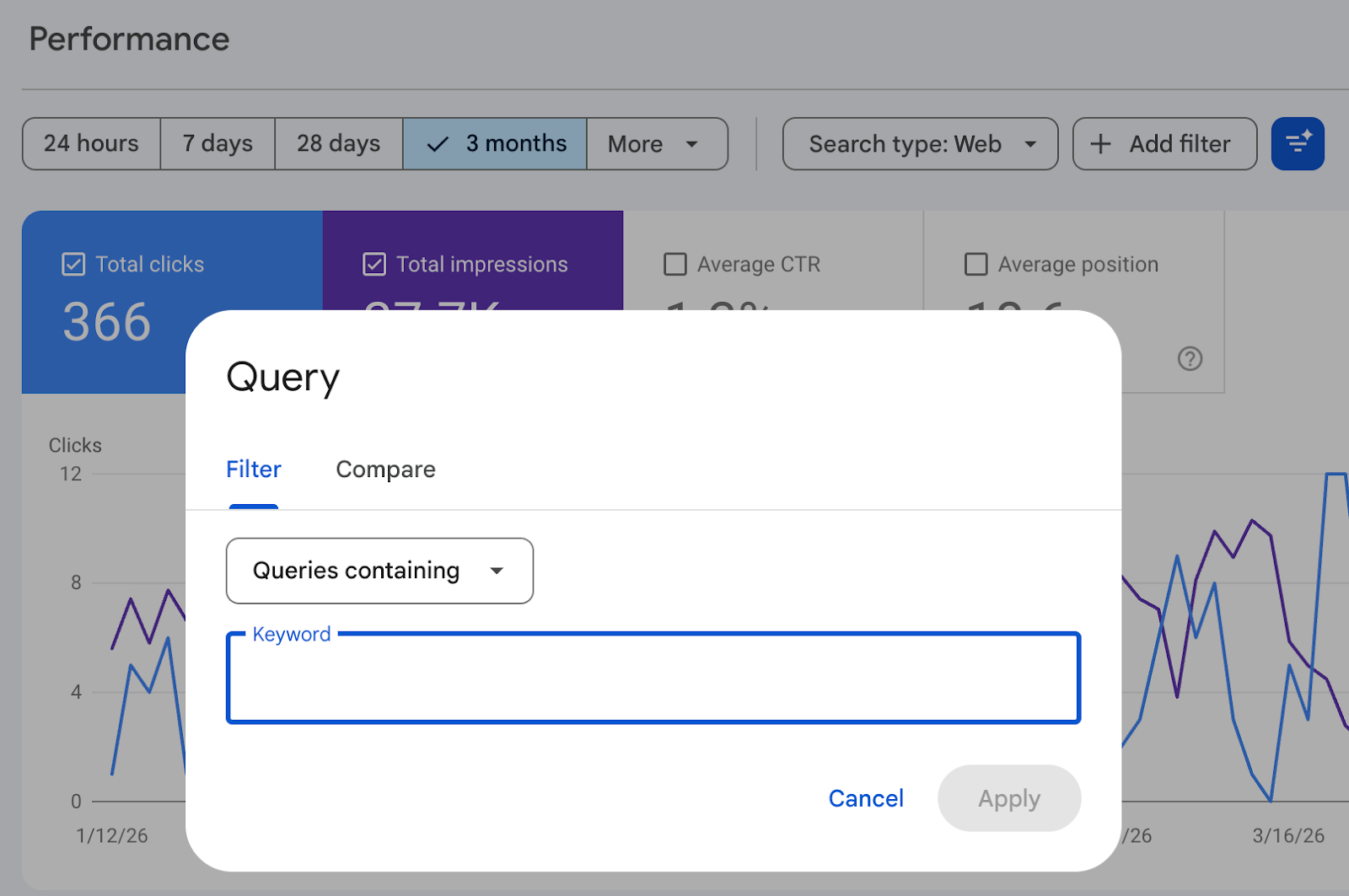
But if you really want to measure the implants topic, you can’t just capture “dental implants.” You also have to capture variations such as:
- Implant dentist
- Tooth implant
- Implant cost
- Implant recovery questions
- And even comparisons like implants versus bridges.
The goal is to group patient language into a consistent topic bucket so you can track total impressions, total clicks, and overall trend lines for that topic.
A strong topic grouping is broad enough to capture real-world variation, narrow enough to avoid irrelevant queries, and consistent enough to compare quarter over quarter. If it's too broad, you inflate visibility. If it's too narrow, you undercount demand.
Once you have a topic view, Search Console becomes more like a business dashboard than a keyword spreadsheet. You can see whether impressions are increasing for the services you care about, whether clicks are growing at a similar pace, and which pages are earning that visibility.
Google Business Profile: Local Visibility Measurement
If Search Console is your organic visibility panel, Google Business Profile is your local visibility panel.
GBP performance typically includes how often your profile appeared, what queries triggered those appearances, and what actions users took.
Local visibility is influenced by categories, services, review velocity and quality, proximity, and broader prominence signals across the web. If you're evaluating visibility without GBP data, you're missing a major part of the patient journey.
The data that Google gives you natively is, unfortunately, incredibly limited. So if you want to take full advantage of the data available from your Google Business Profile, you need to use a third-party tool like Agency Analytics or create a tool that takes advantage of the Google Business Profile API.
A Brief Note on AI Visibility
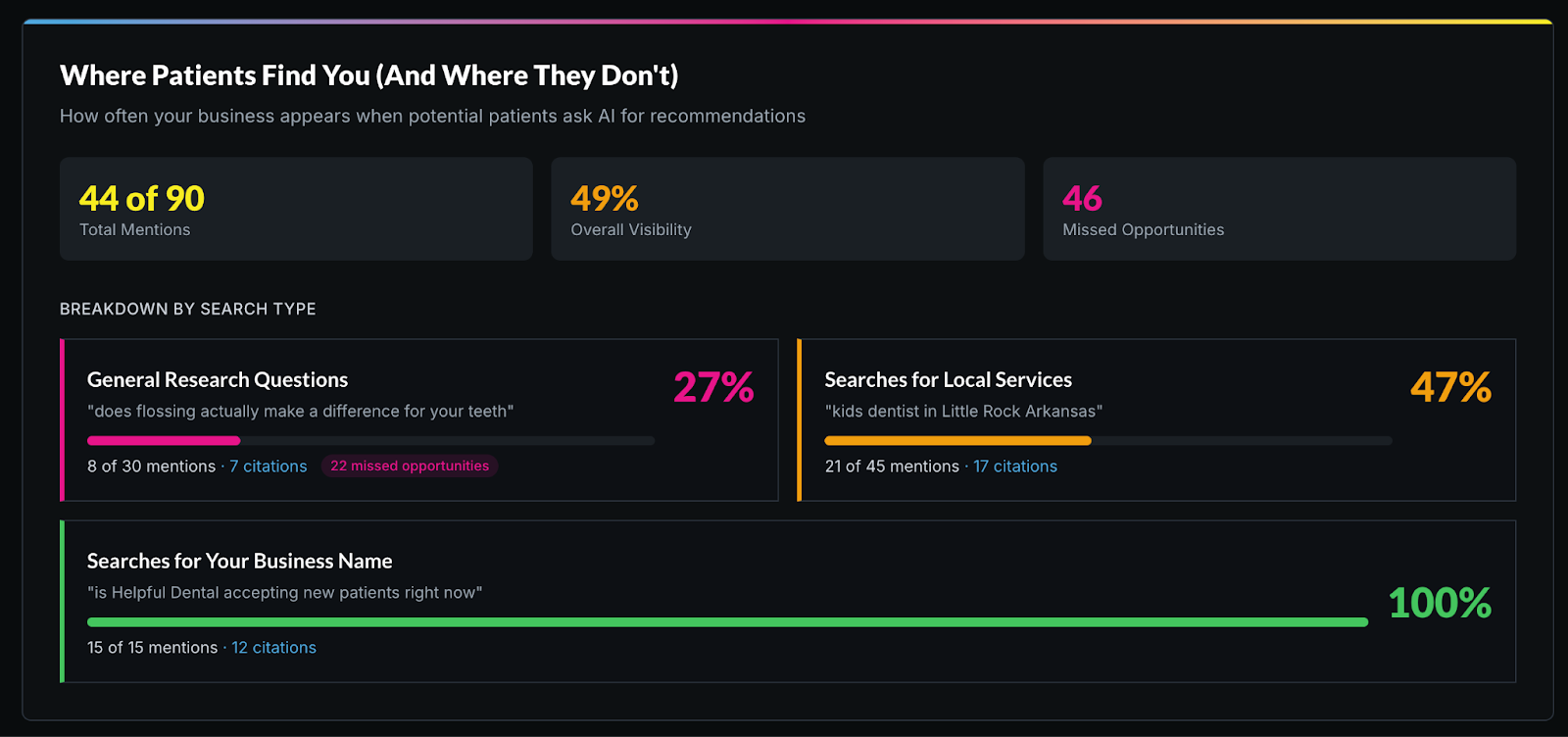
AI Search is changing the relationship between visibility and clicks. Patients may receive synthesized answers before they ever click a website. That means influence can occur without traditional traffic.
This article isn't a deep dive into AI visibility measurement, but it reinforces the same principle: visibility is increasingly disconnected from clicks. Measuring visibility on its own terms is becoming more important, not less.
Google Analytics 4 (GA4): Measuring What Happens After Visibility
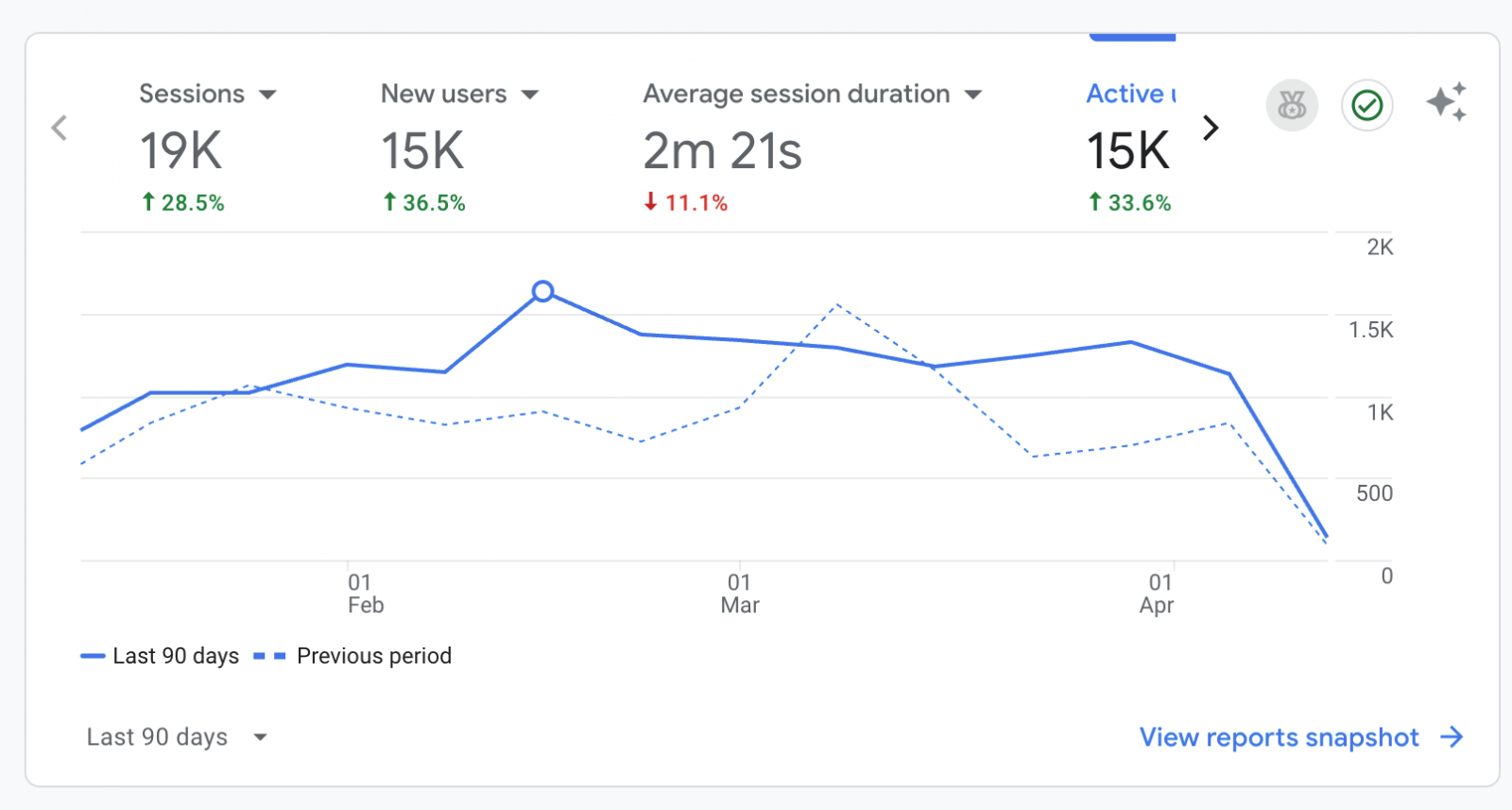
GA4 doesn't measure visibility, it measures what happens after visibility. GA4 helps you understand whether landing pages hold attention, whether visitors are exploring deeper into the site, which pages contribute to contact actions, and how organic traffic compares to other channels.
If Google Search Console answers, “Are we being shown and chosen?” GA4 answers, “When we're chosen, do patients trust what they find enough to take the next step on our site?”
Where This Leads
Visibility is just the beginning of the organic search funnel, not the goal. The ultimate goal is growth for you and your practice, and getting more of your ideal patients in the door. Once you understand how visible you are, the next questions become what happens after patients see you, whether they check out your site, whether they trust what they find, and whether they convert.
As we continue this series, we'll move beyond visibility and go deeper into measuring engagement on your website, walking through how dental practice owners and their marketing teams should evaluate metrics like Sessions, New Users, average Engagement Time, and most importantly: Key Events.
Watch this space for more articles from our SEO team, including how to navigate the jungle of GA4.